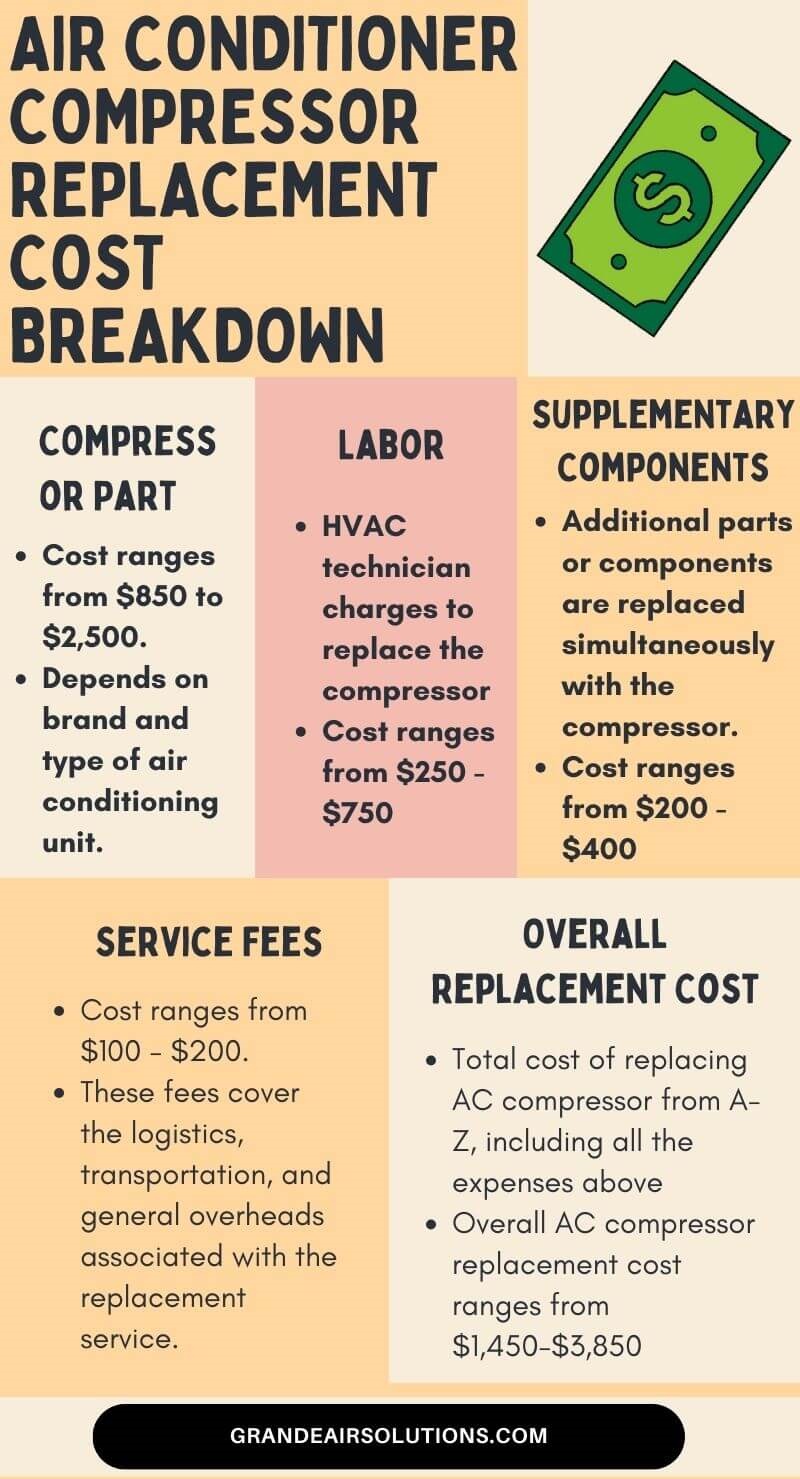
The cost to replace an air conditioner compressor typically ranges from $1,200 to $2,500. Factors influencing the price include the brand, type of compressor, and labor costs.
Air conditioner compressors play a vital role in cooling systems. They circulate refrigerant, ensuring your home stays comfortable during hot weather. Over time, wear and tear can lead to failure, necessitating replacement. Understanding replacement costs can help homeowners budget effectively.
Knowing the signs of a failing compressor, such as unusual noises or inefficient cooling, is crucial. This awareness can save you from unexpected expenses. Always consult professionals to get accurate estimates tailored to your specific needs. Investing in a quality compressor can improve energy efficiency and extend the lifespan of your air conditioning system.
Introduction To Compressor Replacement
Replacing an air conditioner’s compressor can be vital. The compressor is its heart. A faulty compressor can lead to poor cooling and high energy bills. Understanding its significance helps you make informed choices.
Significance Of A Functional Compressor
A functional compressor is crucial for your air conditioning system. It plays a key role in the cooling process. Here are some reasons why:
- Efficient Cooling: It compresses refrigerant to absorb heat.
- Energy Savings: A working compressor uses less energy.
- System Longevity: It extends the lifespan of the AC unit.
- Consistent Comfort: It maintains a steady indoor temperature.
Common Signs Of Compressor Failure
Recognizing compressor failure early can save costs. Here are the common signs:
- Unusual Noises: Loud clanking or hissing sounds.
- Inadequate Cooling: Rooms feel warm despite AC running.
- Frequent Cycling: The system turns on and off often.
- High Energy Bills: Sudden spikes in electricity costs.
- Leakage: Puddles of refrigerant around the unit.
Identifying these signs early can help avoid costly repairs. A professional inspection is advisable when you notice any of these issues.
Assessing Your Air Conditioner’s Needs
Understanding your air conditioner’s needs is crucial. It helps you decide whether to replace or repair it. This choice impacts your comfort and finances.
When To Consider Repair Over Replacement
Sometimes repairing your AC is better than replacing it. Consider these factors:
- Minor Issues: Small problems can often be fixed easily.
- Cost of Repairs: If repairs are under 50% of a new unit’s price, repair.
- Warranty: If your unit is still under warranty, repair it.
- Energy Efficiency: If your unit is energy-efficient, repair it.
Evaluating The Age And Condition Of Your Ac
Your air conditioner’s age greatly affects your decision. Most units last about 10-15 years. Here’s how to evaluate:
| Age Range | Condition | Action |
|---|---|---|
| Less than 5 years | Good | Repair |
| 5-10 years | Fair | Consider Repair |
| 10-15 years | Poor | Consider Replacement |
| Over 15 years | Very Poor | Replace |
Check the overall condition of your AC unit:
- Noise: Loud or unusual sounds may indicate problems.
- Cooling Efficiency: Does it cool effectively?
- Frequent Breakdowns: Multiple repairs can signal replacement.
Assessing your air conditioner’s needs helps make informed decisions.
Understanding Costs Involved
Replacing a compressor in an air conditioner can be costly. Understanding these costs helps in budgeting effectively. Costs vary based on several factors. This section breaks down the replacement expenses and additional costs to anticipate.
Breakdown Of Replacement Expenses
The main expenses for replacing a compressor include:
- Compressor Cost: Prices range from $400 to $1,500.
- Labor Costs: Labor can add $100 to $300.
- Refrigerant: Expect to pay $50 to $150 for refrigerant.
- Miscellaneous Parts: Additional parts may cost $50 to $200.
| Cost Type | Estimated Range |
|---|---|
| Compressor Cost | $400 – $1,500 |
| Labor Costs | $100 – $300 |
| Refrigerant | $50 – $150 |
| Miscellaneous Parts | $50 – $200 |
Additional Costs To Anticipate
Besides the main replacement costs, consider these additional expenses:
- Permit Fees: Some areas require permits, costing $50 to $100.
- System Inspection: A technician may charge $50 to $150 for inspections.
- Old Unit Disposal: Disposal fees can range from $20 to $50.
- Warranty Costs: Extended warranties may add $100 or more.
Understanding these costs allows for better financial planning. Prepare for both the expected and unexpected expenses.
Factors Influencing Compressor Replacement Cost
Understanding the factors influencing compressor replacement cost helps homeowners budget effectively. Several elements determine how much you will pay for a new air conditioner compressor. Below are key factors to consider.
Impact Of Unit Size And Type
The size and type of your air conditioning unit significantly affect the replacement cost. Larger units typically require more expensive compressors. Here are some points to note:
- Central AC units: Usually cost more due to their size.
- Window units: Generally less expensive to replace.
- Portable AC units: Cost varies based on brand and size.
Choosing the right size is crucial. An oversized or undersized compressor can lead to inefficiency. This can increase your utility bills.
Role Of Brand And Model Specifics
The brand and model of your air conditioner play a major role in replacement costs. Different brands have different pricing structures. Here’s what to keep in mind:
| Brand | Average Compressor Cost |
|---|---|
| Brand A | $300 – $500 |
| Brand B | $400 – $700 |
| Brand C | $600 – $900 |
Premium brands often charge more for their compressors. They may offer better warranties and reliability. Research the specific model you own. This helps you gauge potential costs accurately.
How To Save On Replacement Costs
Replacing your air conditioner’s compressor can be expensive. Many homeowners seek ways to reduce these costs. Here are some effective strategies to save on replacement costs.
Exploring Aftermarket Parts
Aftermarket parts can offer significant savings. They are often cheaper than original equipment manufacturer (OEM) parts. Here are some benefits:
- Lower prices.
- Wider availability.
- Variety of choices.
Before purchasing, check the quality of aftermarket parts. Look for reputable brands. Reading customer reviews can help you make an informed decision.
Considering Refurbished Compressors
Refurbished compressors can save you money. They have been repaired and tested to meet standards. Here are some points to consider:
| Advantages | Disadvantages |
|---|---|
| Lower cost | Limited warranty |
| Environmentally friendly | May have shorter lifespan |
| Quality assurance | Not always available |
Check the warranty details before buying a refurbished compressor. A good warranty can provide peace of mind. Always buy from trusted sellers to ensure quality.
The Importance Of Professional Installation
Replacing an air conditioner compressor is a big job. Choosing professional installation ensures safety and efficiency. Many homeowners attempt DIY replacements, but this can lead to serious issues.
Risks Of Diy Compressor Replacement
DIY compressor replacement may seem cost-effective. However, it carries significant risks:
- Improper Installation: Errors can cause system failure.
- Warranty Void: DIY work may void the manufacturer’s warranty.
- Safety Hazards: Refrigerants can be harmful if mishandled.
- Increased Costs: Mistakes lead to costly repairs down the line.
These risks can turn a simple job into a nightmare. Professional help ensures the job is done right the first time.
Benefits Of Hiring A Certified Technician
Hiring a certified technician offers several advantages:
- Expertise: Technicians have training and experience.
- Tools and Equipment: They use specialized tools for the job.
- Time-Saving: Professionals work quickly and efficiently.
- Long-Term Savings: Proper installation reduces future repairs.
- Peace of Mind: Enjoy a worry-free air conditioning system.
Investing in professional installation guarantees reliability. This choice protects your investment and enhances comfort.
Warranties And Service Plans
Understanding warranties and service plans is vital for your air conditioner. These options protect your investment. They can save you money on repairs or replacements. Knowing what to expect helps in making informed choices.
Navigating Manufacturer Warranties
Manufacturer warranties cover specific parts of your air conditioner. They usually last between 5 to 10 years. Here are key points to know:
- Coverage: Most warranties cover the compressor and major components.
- Limits: Some warranties have limitations, like labor costs.
- Transferability: Check if the warranty transfers to new owners.
Always read the warranty details. This ensures you understand what is covered. Keeping your warranty valid requires regular maintenance.
Investing In Extended Service Plans
Extended service plans provide extra protection beyond the manufacturer warranty. Here are reasons to consider them:
- Peace of mind: Avoid unexpected repair costs.
- Comprehensive coverage: Often includes labor and parts.
- Priority service: Get faster repairs when issues arise.
| Plan Type | Duration | Cost Range |
|---|---|---|
| Basic Plan | 1-3 years | $100 – $300 |
| Comprehensive Plan | 3-5 years | $300 – $600 |
| Premium Plan | 5+ years | $600 – $1,200 |
Evaluate the costs and benefits of these plans. Choose one that fits your budget and needs.
Credit: www.bluewaterclimatecontrol.com
Maintenance Tips To Prolong Compressor Life
Keeping your air conditioner’s compressor in great shape is essential. Regular maintenance can extend its lifespan and save costs. Here are key tips to ensure your compressor runs efficiently.
Routine Checks And Servicing
Regular inspections help catch issues early. Follow these steps for effective checks:
- Inspect the air filters monthly. Clean or replace them as needed.
- Check for refrigerant leaks. Low refrigerant can harm the compressor.
- Examine the electrical connections. Loose wires can lead to failures.
- Clean the condenser coils. Dirty coils reduce efficiency.
Schedule professional servicing at least once a year. Technicians can perform detailed checks. They can also clean components effectively.
Preventive Measures To Avoid Future Issues
Taking steps to avoid problems is key. Consider these preventive measures:
- Set the thermostat correctly. Avoid extreme temperature changes.
- Use a programmable thermostat. This helps in energy savings.
- Keep the outdoor unit clear. Remove debris and vegetation.
- Don’t block vents indoors. Ensure proper air circulation.
Regular maintenance can lower repair costs. Well-maintained compressors last longer and perform better.
Conclusion: Making An Informed Decision
Replacing a compressor in your air conditioner is a big decision. Understanding costs and benefits helps you choose wisely.
Weighing Cost Against Long-term Benefits
Costs for a replacement compressor vary widely. Factors include:
- Type of compressor
- Brand reputation
- Labor expenses
- Warranty options
Here’s a quick overview of costs:
| Compressor Type | Average Cost |
|---|---|
| Scroll Compressor | $1,200 – $2,500 |
| Rotary Compressor | $800 – $1,800 |
| Reciprocating Compressor | $600 – $1,500 |
Consider long-term savings. A new compressor can:
- Improve energy efficiency
- Reduce energy bills
- Last longer than old models
Investing now can save money later.
Final Thoughts On Compressor Replacement Investment
Making the right choice involves careful thought. Ask these questions:
- How old is your current unit?
- Is the compressor still under warranty?
- What is your budget for repairs?
- How much will new energy costs be?
Weigh short-term costs against long-term benefits. A smart investment today leads to comfort tomorrow.
Don’t rush the decision. Take time to research options. Consult with HVAC professionals for the best advice.

Credit: homeguide.com
Credit: grandeairsolutions.com
Frequently Asked Questions
What Is The Average Cost Of A Replacement Ac Compressor?
The average cost of a replacement AC compressor ranges from $800 to $2,500. This price includes both parts and labor. Factors such as brand, model, and warranty can affect the overall cost. Always request multiple quotes to find the best deal for your specific needs.
How Long Does It Take To Replace An Ac Compressor?
Replacing an AC compressor typically takes between 3 to 6 hours. This timeframe can vary depending on the complexity of the installation. An experienced technician can efficiently handle the task. Always consult with a professional to get a more accurate estimate based on your unit.
What Factors Affect Compressor Replacement Costs?
Several factors influence compressor replacement costs, including brand and model. Labor rates can vary by location and technician experience. Additional repairs or parts needed can also increase the total cost. It’s essential to assess all these factors for accurate budgeting.
Is It Worth Replacing An Ac Compressor?
Whether to replace an AC compressor depends on its age and condition. If the unit is relatively new and well-maintained, replacement can be cost-effective. However, for older systems, consider the overall efficiency and potential repairs. Consulting with a professional can help make the best decision.
Conclusion
Replacing an air conditioner compressor can be a significant investment. Costs vary based on brand, labor, and location. Understanding these factors helps you budget effectively. Always compare quotes from multiple professionals to ensure you get the best deal. A well-informed choice can lead to improved efficiency and comfort in your home.